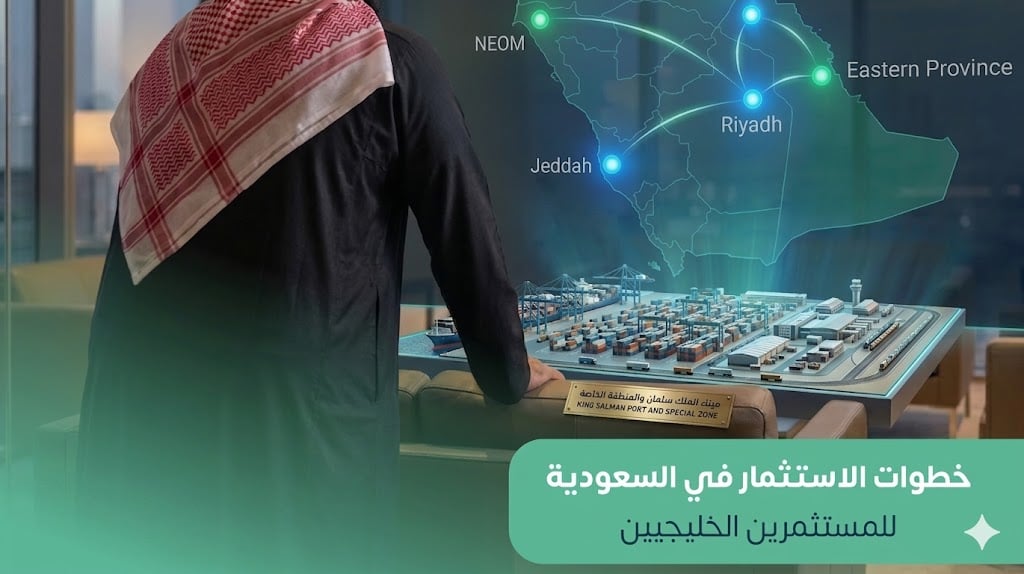
The system governing non-Saudi ownership and investment in real estate is one of the most prominent legal frameworks regulating real estate investment in the Kingdom of Saudi Arabia. This comes within the context of the Kingdom's Vision 2030, which aims to diversify national income sources and open investment opportunities to non-Saudis through clear and transparent regulations. At the heart of this system lies Article 16 of the Non-Saudi Ownership of Real Estate Law, which establishes a fundamental legal principle concerning real estate ownership in the holy cities of Mecca and Medina.
In this article, we review in detail and comprehensively the text of Article 16 of the Non-Saudi Ownership of Real Estate Law, the general conditions for real estate ownership, the advantages of real estate investment in the Kingdom, the practical steps for ownership, in addition to answering the most common questions in this regard.
Abdulaziz bin Yasser Al-Anzi Law Firm
Article 16 of the system for non-Saudi ownership of real estate:
Article 16 of the Non-Saudi Ownership of Real Estate Law is one of the most sensitive and important articles in this law. This article explicitly and unequivocally prohibits non-Saudis from acquiring any real estate rights within the boundaries of Mecca and Medina, whether ownership, easement, or usufruct, by any means whatsoever except inheritance.
Article 16 of the Law on Non-Saudi Ownership of Real Estate (as amended) specifically stipulates that a non-Saudi may not acquire ownership, easement, or usufruct rights to real estate located within the boundaries of the cities of Mecca and Medina, except through inheritance. An exception is made for acquiring ownership rights if the property is endowed, in accordance with Sharia principles, to a specific Saudi entity, provided that the endowment deed stipulates the right of supervision for the competent authority for endowments, as defined by the regulations.
Who are the people subject to the ban according to Article 16 of the system for non-Saudi ownership of real estate?
The scope of application of Article 16 of the Non-Saudi Ownership of Real Estate Law extends to include the following categories:
A natural person who does not hold Saudi nationality, regardless of his nationality or country of residence.
The non-Saudi company is registered outside the Kingdom.
A Saudi company that is founded, co-founded, or has shares in it owned by any person who does not hold Saudi citizenship.
The persons or categories that the Cabinet decides to include in this category.
Exceptions included in Article 16 of the Non-Saudi Ownership of Real Estate Law:
Despite the strict prohibition stipulated in Article 16 of the system for non-Saudi ownership of real estate, the system allows for two specific exceptions:
Inheritance: A non-Saudi may acquire property in Mecca or Medina only through legitimate inheritance, without any other voluntary action.
Endowment to a Saudi entity: Acquiring ownership rights is permitted if it is linked to the endowment of the property to a specific Saudi entity in accordance with Sharia regulations, with the mandatory requirement of the right of supervision for the entity competent in endowments.
Notaries and all competent authorities are prohibited from documenting any transaction that violates the provisions of this system, thus enshrining the mandatory nature of this article in practice.
Conditions for non-Saudis to own property:
The system governing non-Saudi ownership of real estate, in its various articles, specifies a set of general conditions and controls that must be met for any real estate ownership transaction by non-Saudis outside the scope of the prohibition stipulated in Article 16. Among the most prominent of these conditions are:
The property must not be subject to legal dispute.
The property must be documented with an official title deed issued by the competent authorities.
Compliance with the usage restrictions specified for each type of ownership.
The property must be outside the geographical area prohibited according to Article 16 of the system for non-Saudis owning real estate.
Obtaining prior approvals from the relevant government agencies according to the type of investor.
Conditions for real estate ownership for foreign investors in Saudi Arabia:
The system distinguishes between two main categories of foreign investors, each with its own specific conditions:
First: The non-Saudi investor licensed to engage in economic activity:
According to Article 1 of the system, a non-Saudi investor licensed to practice any professional, craft or economic activity may own the property necessary for this activity, including the property designated for his residence and the residence of his employees, after approval from the authority that issued the license.
If the license includes the purchase of buildings or land to construct buildings on them and invest in them by sale or lease, it is required that the total cost of the project, land and building, not be less than thirty million Saudi riyals, with the necessity of investing in the property within five years from the date of its ownership.
Second: Non-Saudi resident for private housing:
According to Article 2 of the regulations, non-Saudi residents legally residing in the Kingdom are permitted to own property for their personal residence, after obtaining a license from the Ministry of Interior and fulfilling the stipulated conditions. This provision is considered one of the most important avenues enabling foreign residents to achieve housing stability within a clear legal framework.
Foreign ownership in Saudi Arabia in the Two Holy Mosques region: Mecca and Medina:
This issue represents the most complex and sensitive aspect of the non-Saudi property ownership system, as religious and sovereign considerations intersect with investment requirements. Article 16 of the Non-Saudi Property Ownership Law has established a strict and exceptional provision specifically for this holy geographical area.
The system, through Article 16 of the Non-Saudi Ownership of Real Estate Law, aims to promote real estate investment within the Saudi Vision 2030, while protecting the privacy of the two holy cities and preserving their unique religious and cultural character.
Among the most important practical controls in this regard is that the relevant regulations—including Article 16 of the Law on Non-Saudi Ownership of Real Estate and subsequent articles—prohibit notaries public from documenting any transaction that violates these rules, thus constituting the first line of legal defense for the application of these provisions. The established exceptions include the following:
Legal inheritance: This remains the only door open to non-Saudis to obtain property in the Two Holy Mosques without their full consent.
Restricted endowment: The system permits endowment to a specific Saudi entity according to precise conditions that ensure the property remains under Saudi supervision.
Advantages of buying property in Saudi Arabia for foreigners:
Despite restrictions imposed in some areas under Article 16 of the Non-Saudi Property Ownership Law, the Kingdom of Saudi Arabia offers foreigners ample real estate investment opportunities in the rest of the Kingdom, within an incentive framework that includes:
A huge and growing real estate market: The Saudi real estate market is witnessing remarkable growth under Vision 2030, with mega projects such as NEOM, the Red Sea projects, Qiddiya and others.
Legal stability and transparency: The system provides a clear and stable legal framework that protects the rights of the foreign investor and ensures that his ownership is officially documented with an approved deed.
Rewarding investment returns: Some vital areas such as Riyadh, Jeddah and the Eastern Province record competitive rental returns compared to many markets in the region.
Government incentives: The Saudi government offers several facilities to foreign investors, including facilitating licensing procedures and providing specialized investment zones.
Advanced infrastructure: The Kingdom is characterized by an advanced and integrated infrastructure that makes real estate investment in it an attractive option with high added value.
Exception for Gulf countries: Citizens of the Gulf Cooperation Council (GCC) countries enjoy additional advantages in real estate ownership according to the rules regulating this.
Steps for foreigners to own property in Saudi Arabia:
For those wishing to invest in real estate in the Kingdom of Saudi Arabia, outside the scope of the prohibition stipulated in Article 16 of the Law on Ownership of Real Estate by Non-Saudis, the practical steps for ownership can be summarized as follows:
First step: Check eligibility and requirements:
Before proceeding with any action, it is necessary to verify that the investor belongs to the categories that are allowed to own property according to the system, that the property to be owned is outside the prohibited scope according to Article 16 of the Non-Saudi Ownership of Real Estate Law, and that it meets all the essential conditions.
Step two: Obtain the necessary license:
The foreign investor must obtain the appropriate license according to the type of ownership; ownership for investment purposes requires a license from the Ministry of Investment, while ownership for private residence requires a license from the Ministry of Interior.
Step three: Check the property's legality:
The regulations require that the property be documented with a valid title deed and free from any disputes, mortgages, or third-party rights that might impede the transfer of ownership. It is advisable to consult a specialized lawyer to verify the legal status of the property.
Step four: Concluding and documenting the contract:
After fulfilling the conditions and obtaining the necessary approvals, the sale contract is concluded and notarized before the competent notary public, so that the deed is officially and duly transferred to the name of the new owner.
Step five: Registration in official records:
The ownership procedures are concluded by registering the property in the official real estate records and issuing the new title deed, which establishes the right of ownership and gives it full legal character.
Conclusion: Are you looking for a reliable legal partner to own your property in Saudi Arabia?
Understanding the provisions of Article 16 of the Law on Non-Saudi Ownership of Real Estate and all other articles related to real estate investment in the Kingdom is an essential first step for any foreign investor. However, the practical application of these provisions and navigating their legal complexities and administrative procedures requires solid legal expertise and precise field knowledge.
This is where the law firm of Abdulaziz bin Yasser Al-Anzi comes in, the legal partner you need.
we Abdulaziz bin Yasser Al-Anzi Law Firm We offer comprehensive legal services including: thorough real estate consultations, contract and deed review, licensing and documentation procedures follow-up, and representation before government agencies. All of this is done with a firm commitment to deadlines and the highest standards of integrity and transparency.
Don't hesitate toContact usJoin our team today to get your free legal advice and embark on a safe and successful real estate investment in Saudi Arabia.