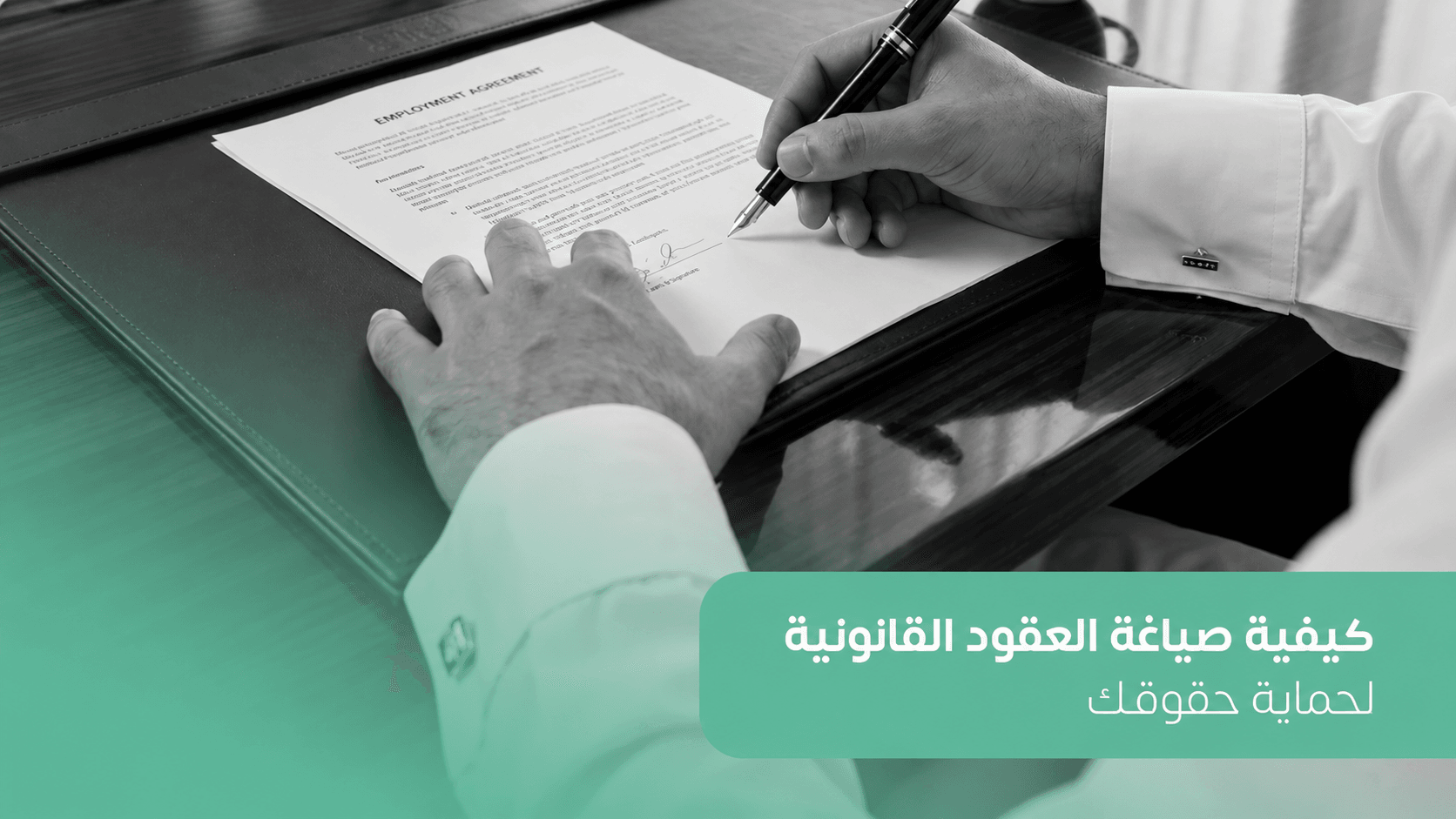
The accuracy of a word in the field of legal translation is not measured only by its linguistic meaning, but also by the obligations and rights that result from it, which may cost millions! It is a science in its own right that combines legal and linguistic knowledge to ensure the integrity of the meaning and structure.
In Saudi Arabia, where Islamic law meets modern civil and commercial regulations, there is an environment that attractsGlobal investmentsThis field is gaining added importance.
In light of this, let us take you on a knowledge tour through which we will review information about legal translation, its foundations, types, and the principles of legal drafting.
Abdulaziz bin Yasser Al-Anzi Law Firm
What is legal translation?
It is a specialized process of transferring legal texts and documents from the source language to the target language, while fully preserving the meaning and legal effect of the original text.
In other words, legal translation requires a thorough understanding of the legal systems, doctrines, and legislative culture in both languages. This is why it is one of the most precise and sensitive types of translation, as any simple error in conveying a term or formulation can lead to complex legal disputes and serious financial consequences.
The importance of legal translation
The importance of legal translation is highlighted by the following:
- Ensuring that all parties to the legal relationship clearly understand their obligations and duties, thereby protecting financial and commercial rights and interests.
- Avoid ambiguity and linguistic misunderstandings, and thus reduce legal disputes that may arise from different interpretations of contract terms.
- Official accreditation, as judicial, governmental and embassies do not accept any legal documents written in a foreign language unless they have been translated by an accredited office.
- Assisting institutions and companies operating in the Kingdom to meet the requirements of local and international regulations when submitting their documents to official authorities.
Foundations and rules of legal translation
It is essential to adhere to a set of fundamental principles that form an essential element in this specialized field in order to achieve a sound and accredited legal translation, including:
- The legal meaning of the text must be conveyed without any distortion, addition, or deletion, down to the smallest details, because the slightest flaw could completely change the ruling.
- The translator's task is limited to faithfully conveying the text as it is, without introducing his opinions or intellectual orientations, to ensure that the legal effect remains unchanged.
- The translator should have extensive knowledge of the differences between countries' systems, especially the characteristics and principles of the Saudi legal system based on Islamic Sharia and civil regulations.
- Adherence to the formal legal style followed in the target language, and the use of terminology approved by judicial authorities.
- Ensuring that the final text is free of any errors by specialists in the legal and translation fields before delivery.
- Adherence to the confidentiality of documents and the sensitivity of information is a fundamental requirement for reliability and professionalism.
Most common types of legal translation
Legal translation encompasses a wide range of types, including official documents that ensure the preservation of rights and adherence to obligations, most notably:
Translation of official laws and regulations
An example of this is the translation of constitutions, basic laws, and Implementing Regulations, which requires the highest degree of accuracy because they are texts binding on everyone.
Translation of contracts and agreements
It includesEmployment contractsEstablishment, sale, lease, partnership, and others.
Translation of judicial documents
Such as judgments, decisions, defense memoranda, and statements of claim, and require strict formal wording that does not allow for interpretation.
Translation of powers of attorney and legal documents
Both public and private documents are highly sensitive and are used in front of embassies and official bodies.
Translation of personal and official documents
Such as birth, marriage, death, identity, and other documents frequently required in embassy and immigration transactions.
Digital translation and correspondence translation
This includes translating legal letters and official email correspondence that contains important legal content.
Definition and types of legal drafting
Legal drafting is the art of transforming the raw material of a legal idea into clear, precise, and practically applicable legislative or contractual texts. The types of legal drafting vary according to the purpose and method, the most prominent of which are:
- The rigid formulation is found in texts that are definitively proven and in which there is no room for interpretation, where the legal ruling comes in a specific form that does not allow for estimation or interpretation.
- Flexible wording is often used in contracts, agreements, and texts that require a degree of adaptability to changing circumstances, giving the judge or contractors some discretion.
- The material formulation and the moral formulation, according to the means of expressing the legal rule, whether by focusing on tangible material acts or through intangible ideas and meanings.
Principles of legal drafting
Legal drafting is subject to precise linguistic and legal principles and standards, whether at the legislative or contractual level, as follows:
- Clarity and precision, using direct language free from ambiguity, and ensuring that the statements are specific, decisive, and formulated in simple words that do not have more than one meaning.
- Precision and accuracy, which means formulating the text in a way that leaves no room for gaps or unintended interpretation. This includes accuracy in the use of verbs, pronouns, and conjunctions.
- Comprehensiveness and logical order, covering all aspects of the subject in an integrated and organized manner, and presenting materials and items in a logical sequence from definitions to obligations and then penalties.
- Adherence to the provisions of Islamic Sharia and the objectives of the regulations, and not violating public order and morals.
It is worth noting that the legal drafting of contracts is a fundamental element of any successful commercial or civil transaction, as the contract includes a set of essential clauses including preambles, definitions, identification of parties, subject matter of the contract, obligations and rights of each party, financial consideration, contract duration, and termination clauses.Force majeureThe dispute resolution and signing mechanism.
The relationship between legal translation and legal drafting
They are two sides of the same coin. Drafting is the art of creating and crafting the legal text in the source language, while translation is the art of faithfully and accurately conveying it into the target language while preserving its binding force. Just as it is impossible to find a sound legal translation without a well-crafted legal draft in the original text, it is impossible to imagine an international contract or legislation in force without going through both of these integrated processes.
Specialized sources agree that mastering the basics of legal translation cannot be done in isolation from the principles of legal drafting, because translation, as we mentioned previously, is the transfer of complex legal concepts and meanings. In order for this transfer to be accurate, the translated text must be formulated in a sound legal style in the target language, in order to maintain the binding force of the text.
Furthermore, translating any legal text requires a thorough understanding of the principles of legal drafting, because ignoring these principles during translation may lead to the production of a superficial and ambiguous text, and thus lose its legal essence.
Therefore, the sciences of legislative drafting and legal translation together form the essential foundations of indispensable legal work, as the study of the principles of legal drafting in both the source and target languages has become an indispensable necessity in the modern era to ensure accurate and effective translation.
Key challenges facing the legal translator
On the other hand, there are a number of important challenges that a legal professional faces in their work in the field of legal translation, which can be summarized as follows:
Differences in legal and linguistic terminology between systems
These terms are directly affected by the policies, cultures, and legislative systems of countries, which requires the legal translator to keep up with these changes, especially since any error or misunderstanding of the context of these systems during translation may affect the meaning of texts and documents, and may lead to serious legal consequences and effects.
Legal styles vary among countries of the world
Legal style, drafting methods, and translation vary according to the cultures, customs, and traditions of countries, as each style is influenced by the language of the environment in which it originated. This is clearly observed by legal professionals when comparing legal formulations and translations between countries of Latin law and countries of Anglo-Saxon law, for example.
Extreme difficulty and deep specialization required
Legal translation is characterized by its difficulty, which becomes evident when transferring a text between two legal systems linked by the source language and the target language. It is in itself a complex process in many aspects, requiring experience and skill in legal analysis and comparisons.
Common mistakes in translating legal forms and templates and how to avoid them
Among the most prominent of these errors is the literal translation of terms without awareness of the fundamental differences between the two concepts, and the failure to standardize the terminology within a single document, which suggests an intentional distinction between the clauses, as well as neglecting the contractual definitions that control the meanings of the vocabulary in the legal context.
Another mistake is confusing the forms of obligation and choice, which directly affect the scope of the obligation and whose incorrect translation may lead to arbitration or contractual disputes.
Punctuation and sentence structure errors also cause changes in the content of obligations, especially when punctuation systems differ between the two languages. Therefore, these errors should be avoided by assigning a specialized translator who is aware of comparative legal systems, and preparing a glossary specific to the project or contract to be translated, in which a specific and fixed equivalent is agreed upon in advance for each legal or technical term that appears in the text before starting the translation, and then conducting a specialized legal review by an experienced lawyer who ensures the accuracy of the text and its consistency with the requirements of the targeted legal system.
The methodology of the legal translator: between text, models, and drafting
The methodology of a professional legal translator is based on three elements: the text, the model, and the wording. His work begins before the translation with a legal analysis of the text to determine its nature, system, and implications.
The second stage then comes, which is the use of models and templates adopted in the targeted legal system. Here, the importance of referring to models of comparative legal systems to understand institutional differences and choose the most appropriate template is highlighted.
The final drafting stage is based on accurately reconstructing the text and conveying the legal meanings and implications according to the drafting conventions in force in the target judicial system. Terms such as “must,” “may,” and “have the right” are carefully chosen because they define the scope of the obligation and the degree of its binding nature. Therefore, this methodology is not completed except with a specialized legal review by an experienced lawyer, to ensure the accuracy of the text and its consistency with the requirements of the targeted legal system and to close the quality circle that begins with the text and ends with the drafting based on the correct model.
We offer inAbdulaziz bin Yasser Al-Anzi Law FirmLegal translation is among the services we offer, provided under the supervision of a select group of certified lawyers and legal translators who combine judicial expertise with linguistic proficiency.
We guarantee accurate translations of your contracts, regulations, and legal memoranda according to the highest standards of quality and complete confidentiality, while adhering to the legal drafting conventions of the target system.Contact usFor more information.