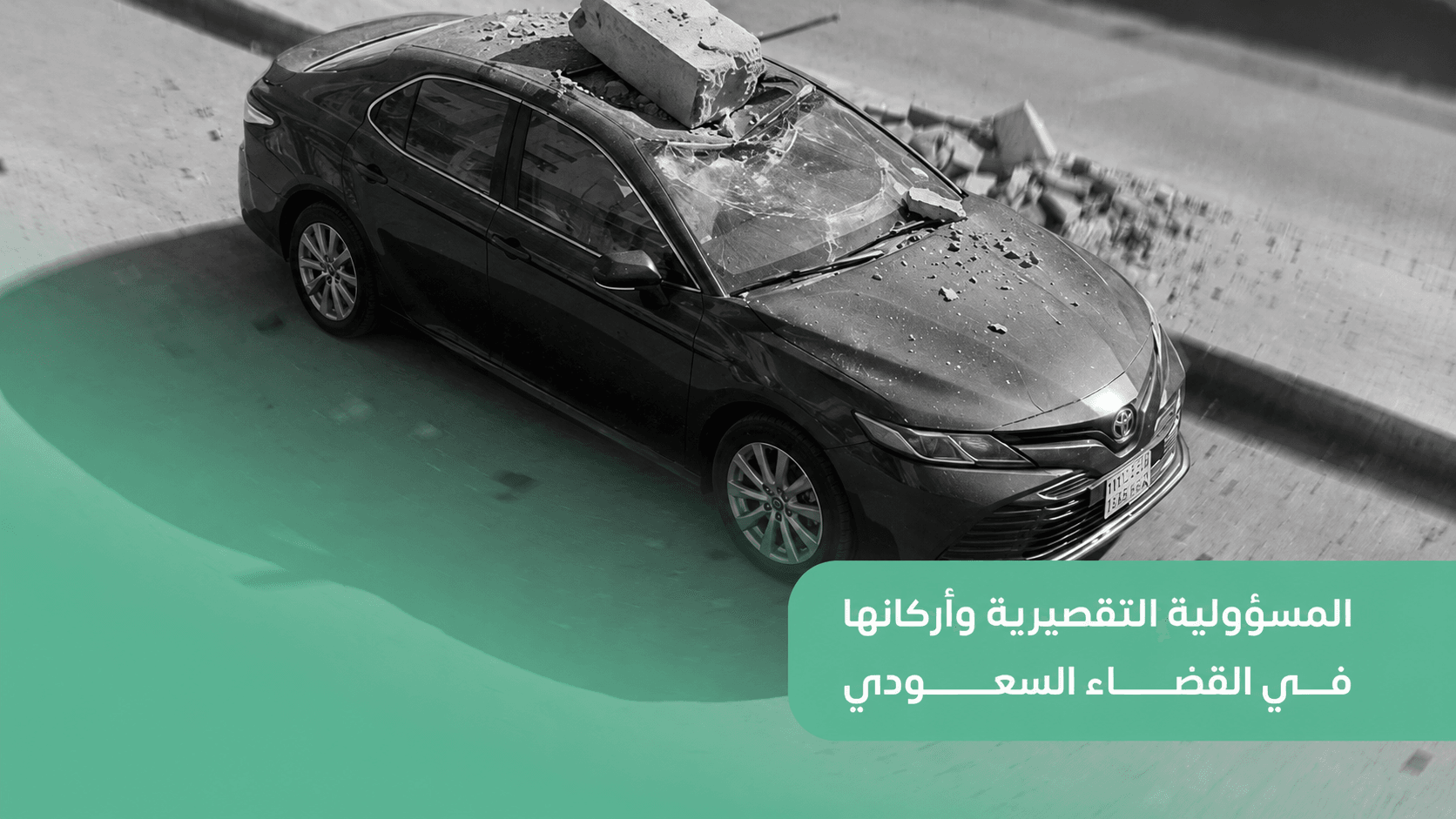
Tort liability is one of the fundamental pillars of the new Saudi civil transactions system, and it is the legal mechanism that ensures the protection of individuals and institutions from damages that may befall them as a result of the actions of others.
The Kingdom of Saudi Arabia has witnessed a qualitative shift in the regulation of civil liability with the entry into force of the Civil Transactions Law on December 16, 2023, which codified provisions that were previously based on various jurisprudential interpretations.
This comprehensive article will examine the concept of this responsibility, its elements, and its provisions in the Saudi judiciary, relying on the texts of this system and analyses by legal experts.
Abdulaziz bin Yasser Al-Anzi Law Firm
The concept of tort liability in the Saudi civil transactions system
The concept of tort liability under Saudi law is based on the provisions of Islamic Sharia, particularly the principle of "no harm, no retaliation," which is a fundamental principle of Islamic jurisprudence in the field of liability. This principle has been crystallized in...Civil Transactions SystemWith clear texts, as Article 120 stipulated that every mistake that causes harm to others obligates its perpetrator to provide compensation. From this we understand that the obligation to provide compensation arises directly from the harmful act without the need for a contractual relationship between the two parties.
Tort liability is based on five main sources of obligations under the new system, namely: contracts, unilateral acts, tortious acts (negligence), unjust enrichment, and regulatory texts. This system is distinguished by the fact that it cannot be waived or restricted by agreement of the parties, unlike contractual liability, in which it is permissible to agree to define its scope or exclude it within certain limits.
The difference between tort liability and contractual liability
The difference between tort liability and contractual liability lies in the source of the obligation that the responsible party breached. Contractual liability arises from the breach of an obligation resulting from a contract existing between the two parties, meaning that the source of the obligation is the will of the contracting parties. Tort liability, on the other hand, arises from the breach of a general obligation imposed by law on everyone, which is the obligation not to harm others, without there being a prior contractual relationship linking the two parties.
The burden of proof also differs between the two types; in contractual liability, the debtor bears the burden of proving that he has fulfilled his contractual obligation, while in tort liability, the burden of proving fault, damage, and causation falls on the injured party himself.
Elements of tort liability
In the Saudi judicial system, tort liability is based on three interconnected pillars, clearly defined by law, which grants courts broad discretionary power in their application. These pillars are:
First: The element of error
It is any deviation from the behavior imposed by law, custom, or the requirements of social duty. The new system has broadened the scope of the concept of fault to include: Intentional fault: such as intentional assault on a person, property, or honor. Unintentional fault: such as causing a traffic accident due to excessive speed or inattention.
The new system has introduced important developments, such as the codification of what is known as judicial presumptions in proving fault, where the court can infer the existence of fault from the circumstances of the incident without the need for direct evidence, especially in cases such as traffic accidents or medical errors.
Second: The element of harm
It is the negative impact that befalls a person in his person, his property, or his reputation, and for liability to be established, the damage must be:
- Real, that is, actually and not just a possibility or expectation.
- Direct, meaning resulting directly from the wrong action.
- Appreciable, whether materially or morally.
Damage in tort liability is also divided into two types:
- Material damage: such as medical costs, property damage, loss of income, or lost profits.
- Moral damage: such as psychological pain, defamation, or damage to reputation and dignity.
Article 136 of the system affirms the principle of full compensation, stating that compensation must restore the injured party to the condition he was in if the damage had not occurred.
Third: The element of causal relationship
For liability to be established, there must be a direct causal relationship between the mistake committed and the resulting damage; that is, the damage must be a natural consequence of the mistake, and not merely an occasion or an indirect cause.
Therefore, the causal relationship is negated by force majeure, which are exceptional events of a general nature that cannot be foreseen or prevented, as well as the fault of a third party if the damage resulted from the action of another person with whom the defendant has no connection, and the fault of the injured party himself, i.e. if the injured party contributed by his fault to causing or increasing the damage.
Examples of tort liability
To further clarify, we offer you a set of examples that combine error, harm, and causation in various fields:
- A surgeon abandoned the follow-up care of a patient after surgery, which led to the patient suffering internal bleeding and a deterioration in his health due to medical negligence.
- The collapse of part of a residential building was a result of the supervising engineer’s reliance on substandard building materials and his negligence in monitoring the implementation of technical specifications, which caused serious damage to neighboring properties and resulted in injuries to residents.
- A hotel left exposed electrical wires in one of its rooms, resulting in a guest being electrocuted and suffering severe burns due to negligence in maintaining the facility.
- The negligence of the owner of a neighboring property in repairing a crumbling wall led to its collapse onto a neighbor's car, completely destroying it.
Rules of tort liability
The provisions of tort liability include several important aspects, including, for example:
Responsibility for personal action: The general principle is that a person is responsible for his harmful actions, whether they are committed directly by him or through someone who uses him.
The person in charge of the work is responsible to the injured party for the damage caused by his subordinate through his error while performing his work or because of this work, if the person in charge has actual authority to direct and supervise the subordinate.
This means that institutions and companies in Saudi Arabia have become responsible for the mistakes of their employees during work, which entails: increased attention to employee training and qualification, development of safety and internal control systems, with the need to review insurance documents to cover these new risks.
Whoever possesses or guards something that can cause harm to others (such as animals, machinery, leaning buildings, or hazardous materials) is responsible for the damage caused by that thing, unless they prove that the damage resulted from an external cause beyond their control, such as…Force majeureOr the fault of the affected party.
The system also stipulates that if there are multiple persons responsible for a harmful act, they are jointly liable for compensation, and the court determines each person's share of the compensation, and if that is not possible, the responsibility is divided equally among them.
If the injured party contributed to causing or increasing the damage through his own fault, his right to compensation is forfeited or reduced in proportion to his contribution to the damage.
Liability of a minor
The Saudi Civil Transactions System addresses the liability of those lacking legal capacity, such as minors who are not discerning and the insane. It establishes the principle of compensation from the money of the non-discerning person in the event that it is impossible to obtain compensation from the person responsible for him, "the guardian or custodian." This principle ensures that the right of the injured party is not lost on the pretext that the aggressor is not legally or religiously responsible. Civil liability here relates to compensating for financial damage and is not a criminal penalty.
Barring liability for tort
There are exceptional cases in which a person commits a harmful act but is exempt from or relieved of responsibility, namely:
- Legitimate defense: The system stipulates that the right to defense is not absolute, but is limited to the necessary extent. If a person exceeds the limits of defense, he becomes an aggressor who is liable to compensation.
- Necessity situation: such as someone breaking down a door to save a drowning person from death, and here the system decides on appropriate compensation, which is determined by the court.
Types of tort liability
Tort liability can be classified into three main types:
- Direct liability arises from the actions of the person himself, and it is the most common type in the courts. An example of this is a driver who causes an accident due to his negligence.
- Indirect liability arises from the actions of others when there is a relationship of subordination, such as the liability of the employer for the mistakes of the worker, or the liability of the guardian for the actions of the minor. This liability does not require proof of error on the part of the superior, but it is sufficient to prove that the subordinate committed the mistake while performing his work.
- Liability for things arises from damage caused by things under a person’s care, such as animals, machines, or buildings.
Scope of compensation in tort liability cases
Compensation in tort liability includes: in-kind compensation, which is restoring the situation to what it was before the damage, such as repairing the damaged car or restoring the thing to its original state, and financial compensation.
Financial compensation is provided in two cases: if in-kind compensation is not possible, such as in cases of moral damage or total loss of the thing, or if the injured party requests financial compensation, and he has the option to do so.
The system also stipulates a three-year statute of limitations for compensation claims arising from harmful acts, starting from the day the injured party became aware of the harm and who was responsible for it. The claim is extinguished in all cases after ten years from the date of the harmful act. These periods are mandatory and cannot be violated by agreement.
Burden of proof in tort liability cases
The general rule of evidence is: “The burden of proof is on the one who claims,” and the injured party must prove the availability of the three elements: fault, damage, and causal relationship. However, there are important exceptions, where the court may rely on circumstantial evidence that indicates the existence of fault, especially in cases where direct proof is difficult.
There are certain cases, such as liability for the actions of others or for the custody of things, where the system assumes the existence of fault and therefore denies liability.
In complex cases such as medical or engineering errors, the courts rely on expert reports to determine the extent of the error and the causal relationship.
In conclusionIn this article, we reviewed the details of tort liability in the Saudi judiciary, including its concept, its three pillars, its provisions and types, and we saw how the new Civil Transactions Law brought about a qualitative shift in regulating this vital field, through codifying consequential liability, expanding the scope of compensation to include lost profits, and setting clear statutes of limitations for claims.
If you believe you have suffered harm due to someone else's fault, or if you are facing a tort claim, the first step you should take is to document everything by gathering all the evidence related to the incident, and then contacting [the relevant authorities/organization].Abdulaziz bin Yasser Al-Anzi Law FirmA specialist in Saudi civil law to assess your legal position and help you take the appropriate action.
What are you waiting for?Contact us